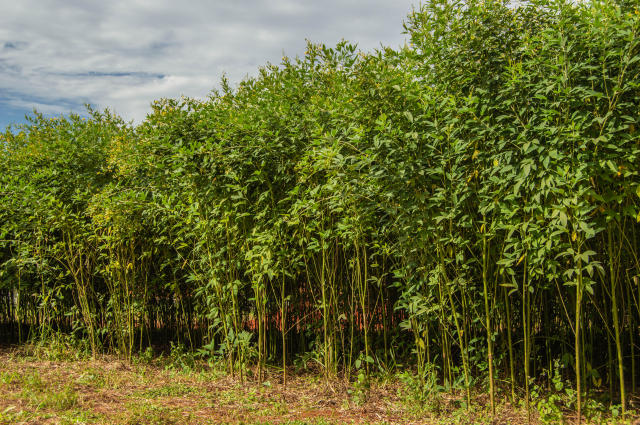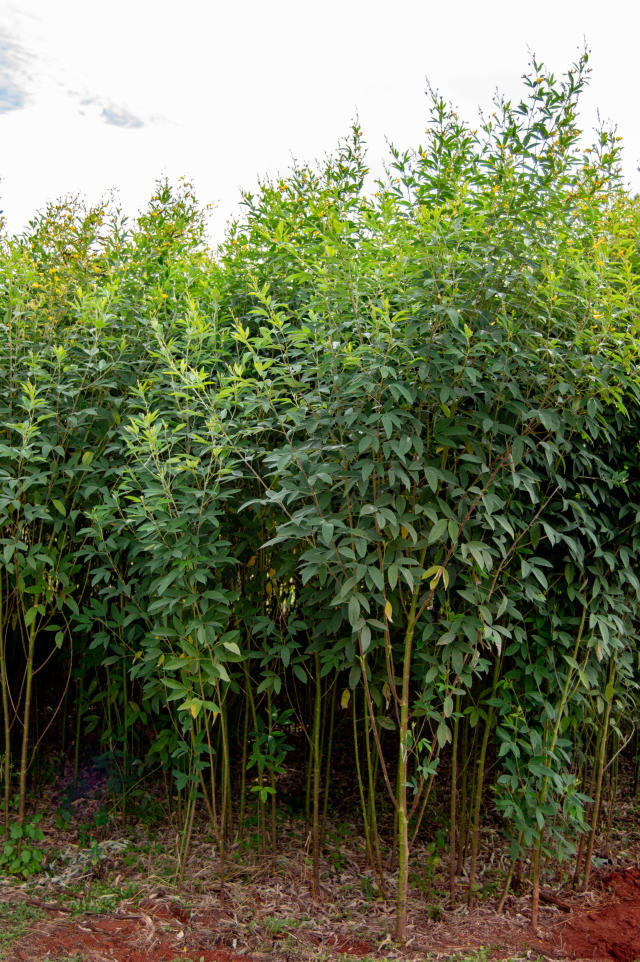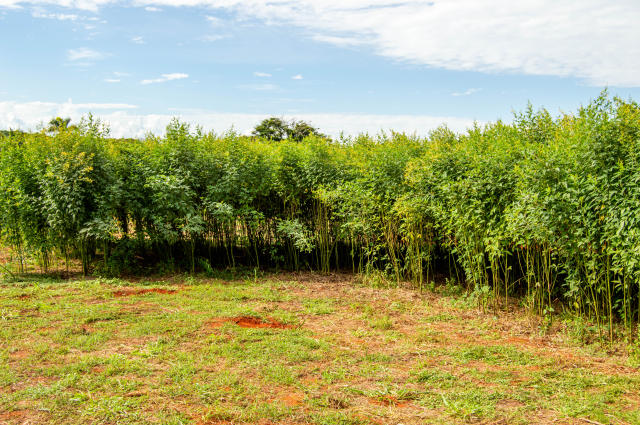
BRS Guatã is a pigeon pea lineage selected for the control and combat of the nematodes *Pratylenchus brachyurus *, *P. zeae* , * Meloidogyne javanica *, *M. incognita*, and * Heterodera glycines* (races 2 and 3) ; considered pests with a negative economic impact on agriculture. For efficient nematode control, it is necessary to seek alternatives to reduce genetic resistance caused by the repeated use of the same mechanisms of action. The BRS Guatã cultivar serves as a strategic alternative to be considered in integrated disease management.
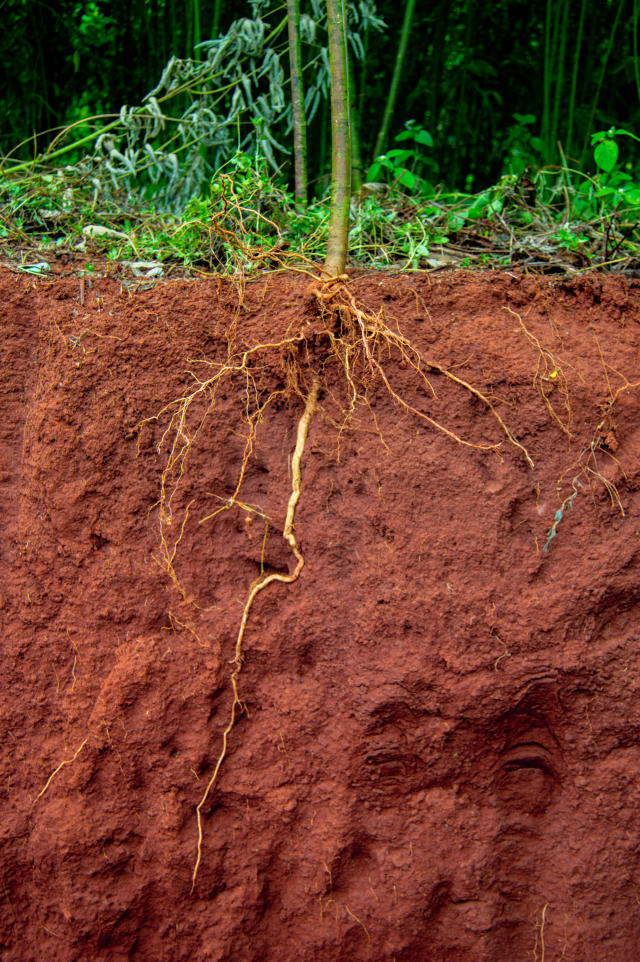
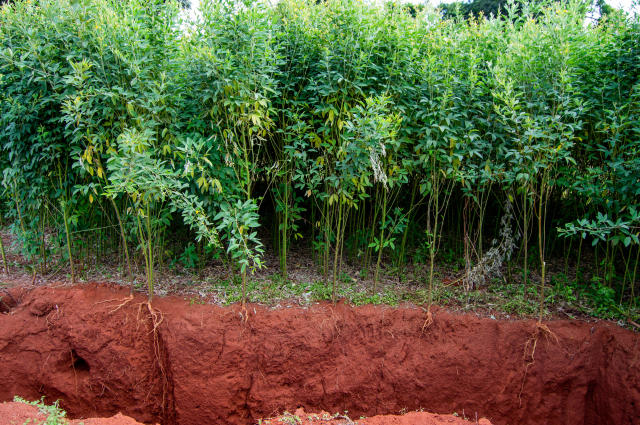
The BRS Guatã cultivar offers an effective opportunity for the control and management of nematodes when used as a single crop within a crop rotation system in infested areas. It also takes advantage of the benefits that pigeon pea cultivation can provide, such as: improved chemical, physical, and biological soil properties through nitrogen fixation and green manure; a source of protein during the dry season, serving as an alternative for animal feed and the recovery of degraded pastures.
CHARACTERISTICS
– Resistance to the nematodes Pratylenchus brachyurus , P. zeae , Meloidogyne javanica , M. incognita and Heterodera glycines (races 2 and 3).
– High dry matter productivity.
– Earlier flowering (30 days) compared to Guandu BRS Mandarim.- Intermediate height with thinner and more flexible stems, facilitating cultivation practices compared to Guandu BRS Mandarim. – Through symbiosis with Bradyrhizobium , it performs biological nitrogen fixation, improving soil fertility. – It is not a host of the fungus Phakopsora pachyrhizi , which causes Asian soybean rust. – Good soil decompaction capacity. – Alternative for animal feed and recovery of degraded pastures. – Alternative as a mulch plant for soil protection. – Alternative as a protection and shade plant for the establishment of other crops (coffee and fruit trees).
This technological solution was developed by Embrapa in partnership with other institution(s).
IMAGE GALLERY