
- Researchers evaluated the life cycle of sustainable aviation fuel (SAF) produced in Brazil from second-crop canola.
- The study considers the role of agriculture and its integration with renewable hydrogen as strategies to reduce emissions.
- The results show that biofuel reduces emissions by up to 55%, depending on the adoption scenario, compared to the use of fossil kerosene.
- The origin of the hydrogen used in the industrial conversion process is crucial for the fuel’s climate performance.
- The use of green hydrogen produced with renewable energy causes emissions to fall between 86% and 94% in the industrial conversion stage.
- An assessment by the University of Brasília (UnB) and Embrapa warns of the impacts of fertilizer use in the agricultural stage.
A life cycle assessment of sustainable aviation fuel (SAF) produced from second-crop canola in Brazil indicates a potential reduction of up to 55% in greenhouse gas (GHG) emissions, depending on the adoption scenario, compared to fossil kerosene Jet-A1. The study analyzes all stages of the process, from raw material cultivation to the final use of the fuel in the aircraft, an approach known as Life Cycle Assessment (LCA), which allows for understanding the environmental impacts throughout the entire production chain.
According to Embrapa Environment analyst Priscila Sabaini , the assessment showed that, in an optimistic—and hypothetical—scenario, emissions could be reduced by up to 55%. She emphasizes, however, that this percentage represents a maximum potential, based on ideal adoption conditions that are not yet feasible in practice. Currently, there are technical and regulatory limitations that, for example, restrict the replacement of traditional fossil fuels.
One of the obstacles is that, in the case of HEFA-type SAF (produced from oils and fats), the mixture with conventional aviation kerosene is limited to about 50%. This means that, even with widespread adoption, it is not yet possible to fully replace jet fuel with sustainable alternatives.
Therefore, according to Sabaini, the percentages presented should be interpreted as an estimate of the potential for emission mitigation, and not as an immediate or guaranteed result. Progress will depend on factors such as technological advancements, increased production of agroforestry systems, and changes in sector regulations.
This research is the result of a collaboration between the Energy and Environment Laboratory, linked to the Postgraduate Program in Mechanical Sciences at the University of Brasília (UnB), Embrapa Agroenergia (DF), and Embrapa Meio Ambiente (SP), and contributes to the international debate on the decarbonization of aviation.
Scenarios considered
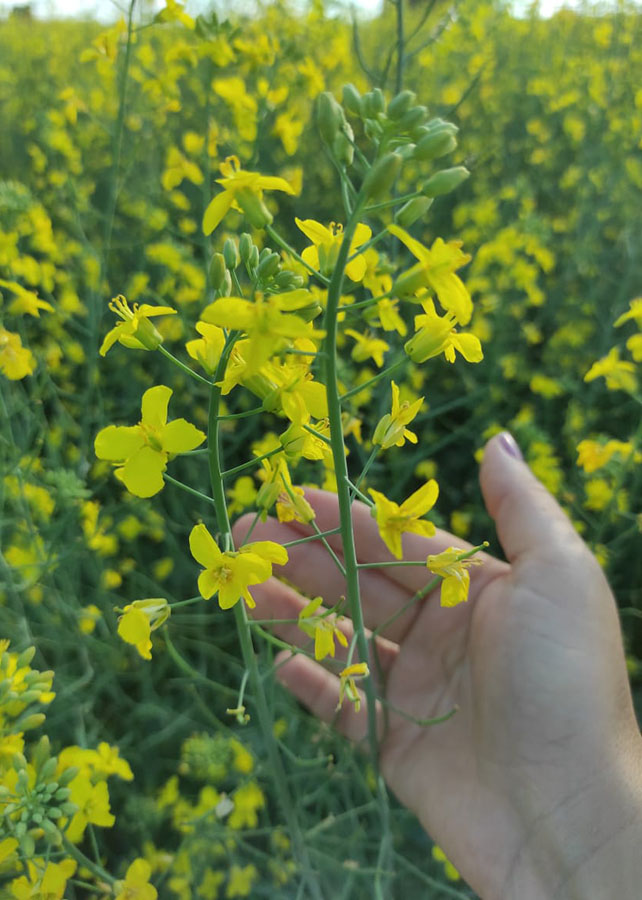
The analysis was conducted considering all emissions from canola production to fuel combustion in the aircraft. Real data from Brazilian producers were used, representing tropical cultivation conditions in a second-crop system.
The study also includes modeling the HEFA (Hydroprocessed Esters and Fatty Acids) route, a technology that transforms vegetable oils into aviation fuel through hydrotreatment processes. The production of one megajoule (MJ, equivalent to one million joules, a unit of energy measurement) of bio-kerosene was evaluated in three scenarios: fossil Jet-A1; a 50% SAF/50% Jet-A1 blend; and 100% SAF.
The analysis engages with international guidelines such as CORSIA , a program of the International Civil Aviation Organization (ICAO) for the reduction and offsetting of CO2 emissions from international flights. The work also engages with national decarbonization policies, including the National Biofuels Policy ( RenovaBio ) and the Future Fuel Law .
“The aviation sector needs technically viable alternatives to meet global climate goals, and agroforestry systems are currently the main short- and medium-term strategy. Our unique approach was to analyze canola cultivated as a second crop in Brazil, in rotation with soybeans, under tropical conditions that are still poorly represented in international literature,” says Giulia Lamas, a collaborator at Embrapa Meio Ambiente and a doctoral candidate at the University of Brasília.
Agriculture still accounts for emissions.
The results indicate that the agricultural phase accounts for the largest share of emissions in the canola agroforestry system’s life cycle. Cultivation contributes approximately 34.2 g of CO₂ eq./MJ, driven mainly by fertilizer production and nitrous oxide (N₂O) emissions from the soil. The industrial conversion stage via HEFA contributes about 12.8 g of CO₂ eq./MJ when using fossil-derived hydrogen.
“The production and use of fertilizers, especially nitrogen fertilizers, represent the main critical point of the system, both because of the associated emissions and the impacts on water and ecosystems,” warns Alexandre Cardoso , a researcher at Embrapa Agroenergia. The researcher highlights that bio-inputs are an excellent option for reducing emissions in canola production.
The impacts associated with fertilizer use were classified into categories such as eutrophication (excess nutrients in aquatic environments that can cause algal blooms and reduced oxygen in the water) and human toxicity, indicating that efficient input management is crucial for the environmental performance of the fuel.
“The analysis shows that the sustainability of agroforestry systems depends both on industrial advances and on improvements in agronomic practices,” adds Professor Edgar Amaral Silveira from UnB, supervisor and co-author of the study.
| Green hydrogen is crucial.The study shows that the origin of the hydrogen used in fuel production is a decisive factor for environmental performance.When fossil-based hydrogen is replaced by hydrogen produced from renewable energy sources, such as solar and wind, there is a significant reduction (ranging from 86 to 94%) in emissions at the industrial stage. In more advanced scenarios, with the integration of low-carbon hydrogen, total fuel emissions can be significantly lower compared to fossil kerosene.”The integration of bioenergy and renewable hydrogen can significantly reduce the carbon intensity of aviation fuels,” Silveira points out. |
Land use and Brazilian specificities
The study also indicates a reduction in the use of fossil resources by measuring an indicator known as fossil depletion, which represents the amount of non-renewable resources used throughout the process.
As expected with agricultural biofuels, there are impacts associated with land use, mainly concentrated in the cultivation stage. In Brazil, however, there is a relevant characteristic: canola is cultivated primarily as a second crop, in rotation with soybeans. Therefore, this cultivation takes advantage of already used areas and increases the efficiency of land use.
“Brazil has a significant comparative advantage: here, canola is not grown as a primary crop that ‘competes’ for land, but as a second-crop option in winter and during the off-season, in integrated rotation systems. This improves the sustainability performance of Brazilian canola compared to regions where it is cultivated as a single crop,” highlights Bruno Laviola , head of Research and Development at Embrapa Agroenergia and the researcher responsible for the tropicalization of canola.
The study also highlights that emissions associated with indirect land-use change (iLUC) were not considered, a limitation and an opportunity for future research.
Implications for climate policies and certification.
The results highlight the importance of Brazilian regulatory tools for the sustainable expansion of biofuels.
Currently, canola is not yet included in the HEFA route of RenovaCalc , a tool used by RenovaBio for carbon intensity certification and the issuance of Decarbonization Credits ( CBIOs ). The inclusion of this raw material could expand certification options and better reflect the national agricultural diversity.
Furthermore, the study contributes data that can support methodological improvements in RenovaCalc, especially regarding the carbon intensity of hydrogen, agricultural emissions, and integration with renewable energy.
Sustainability beyond carbon.
The study emphasizes that environmental analysis should go beyond carbon emissions, also considering impacts on water, soil, and ecosystems.